
Flashing Repair in the USA
Flashing sits at every roof penetration where water finds an easy path downward. Our technicians trace each strip from edge to edge noting how overlaps sit against the slope and whether sealant has pulled away from the metal surface.
When flashing fails water travels under shingles and reaches the decking long before interior stains appear. MDS Roof Doctors maps these routes during inspection so the repair targets the actual entry point rather than the visible symptom. When flashing repair affects the valleys MDS Roof Doctors inspects the slopes for any additional roof repair in the USA.
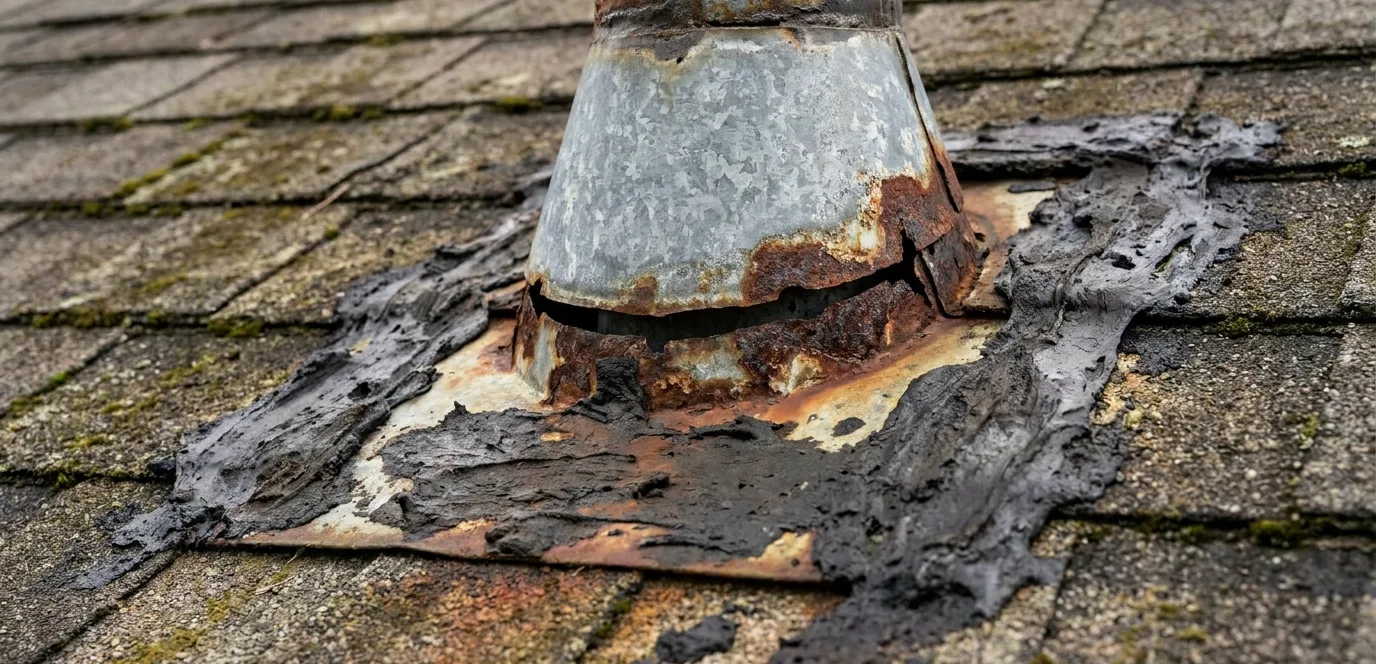
Visible Indicators of Flashing Trouble
- Dark streaks forming along chimney sides after storms
- Soft spots in ceiling drywall directly under vent pipes
- Rust flakes collecting in gutters below roof valleys
- Daylight visible through gaps at skylight curbs
- Mold lines on attic rafters near roof penetrations
How Flashing Deteriorates
Thermal expansion lifts nails and breaks the bond between flashing and underlayment. Once the seal opens rain drives under the metal and soaks the felt or synthetic layer until it reaches the sheathing.
Debris from overhanging trees traps moisture against the flashing edge and accelerates corrosion on aluminum and galvanized steel. Copper holds longer but still develops pinholes after decades of acid runoff from cedar shingles.
Inspection Points Our Technicians Measure
Technicians check the height of step flashing against the wall surface and confirm each piece overlaps the one below by at least two inches. They also measure the distance from the roof edge to the first course of counter flashing.
At pipe boots they record the condition of the rubber collar and note whether the metal base flange remains flat against the shingles. Any lifting allows water to circle the penetration and reach the decking below.
Materials and Repair Choices
For isolated damage we cut out the affected section and insert new preformed aluminum or copper flashing that matches the existing profile. Joints receive a bead of butyl tape followed by compatible sealant rated for metal-to-asphalt contact.
When multiple penetrations show age we replace the entire valley or apron with one continuous piece. This eliminates seams that previously collected ice and debris and reduces future leak points along the slope.
What Homeowners Can Do First
Clear loose leaves and pine needles from gutters and valleys using a leaf blower from the ground. This removes standing water that presses against the lower edge of flashing during the next rain.
Photograph any interior ceiling marks and note the date and weather conditions when they first appeared. These details help our technicians correlate interior symptoms with exterior flashing locations without extra probing.
Flashing Repair questions
Why does flashing fail faster near chimneys?
Heat from the flue causes repeated expansion that cracks sealant and lifts nails. Soot and creosote also trap moisture against the metal and speed corrosion on the lower corners where water pools.
Can homeowners replace flashing themselves?
Partial patches from ladders often leave the upper edge unsealed and create new entry points. Proper repair requires lifting shingles in courses and reinstalling underlayment which needs roof access and matching material.
What type of metal lasts longest in flashing work?
Copper resists corrosion longest but costs more upfront. Aluminum works well when coated and properly fastened. Galvanized steel needs annual inspection because zinc coating wears through at cut edges first.
How does storm damage affect flashing?
Wind-driven debris dents metal and misaligns overlaps. Hail can puncture thin sections while hail dents also break the paint film allowing rust to start at every impact point.
Arrange Flashing Repair
Contact MDS Roof Doctors to schedule an inspection focused on roof flashing.