
Gutter Repair in the USA
Our technicians begin every Gutter Repair job by walking the perimeter and noting where water leaves the roof edge instead of the downspout. They check whether leaves or granules have packed against the back wall of the trough and whether the front lip has been pulled outward by ice weight. These observations guide the rest of the visit without any disassembly yet.
Next they set a four-foot level inside the trough at several points to record how much the channel falls per ten feet. Readings below one-quarter inch per foot show where standing water will freeze or evaporate slowly and start rust or algae. The same check reveals spots where hangers have loosened and let the gutter sag. The flashing around gutter repair areas receives attention from MDS Roof Doctors during any roof repair project in the USA.
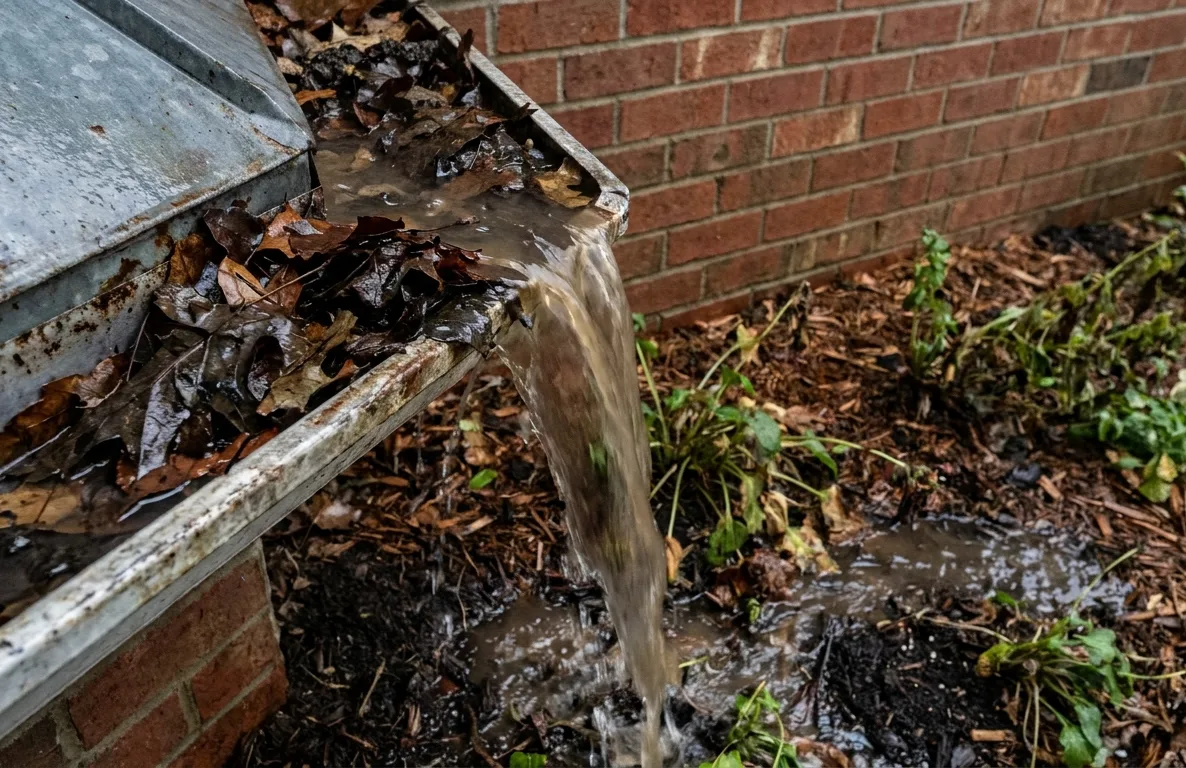
Observable Indicators of Gutter Trouble
- Water trails mark the fascia directly beneath the gutter line after rain stops.
- Granules collect in the bottom of the trough instead of washing out the downspout.
- Hangers or spikes have pulled away from the rafter tails leaving visible gaps.
- Sections of gutter lean outward so the front edge sits lower than the back wall.
- Stains appear on siding or foundation where overflow has run down the wall.
Inspection Steps Our Technicians Follow
Technicians first clear loose debris by hand so they can see the actual metal or vinyl surface. They then measure the distance from the gutter bottom to the roof edge at each hanger to confirm the original pitch has not changed. Any hanger that has dropped more than one-quarter inch gets tagged for replacement.
They also look at every mitered corner and end cap for small cracks that let water seep sideways into the wood behind. A moisture meter placed against the fascia records whether the wood has already begun to soften. These readings stay in the job notes so the homeowner sees exactly where the water path started.
Why Gutters Fail Over Time
Most gutter problems start with repeated freeze-thaw cycles that widen seams or pop rivets. When snow melts and refreezes inside the channel the expansion forces the metal apart at the weakest joint. Heavy summer downpours then push water through those opened seams before it can reach the downspout.
Another common cause is improper hanger spacing after an earlier roof job. If a roofer removed and reset hangers too far apart the gutter bows under its own weight plus water load. The low spot collects debris and the cycle repeats until the front lip folds outward and water spills over.
Repair and Section Replacement Choices
When only one joint has opened our technicians cut out the damaged six-inch section and rivet a new piece in place using butyl tape behind the seam. The new section receives the same gauge and color as the original so the repair blends visually from the ground.
If the entire run has lost pitch they remove the old hangers, install new longer fascia brackets that restore the one-quarter-inch fall, and reattach the existing trough. This keeps the homeowner from replacing material that is still sound while correcting the drainage problem at its source.
Materials and Fasteners Used on Site
Technicians carry both five-inch and six-inch aluminum coil stock plus matching inside and outside miters. They use stainless-steel rivets and a compatible sealant that stays flexible after repeated temperature swings. All new hangers are two-piece fascia brackets that can be adjusted after installation if the fascia itself has slight irregularities.
When the existing gutter is vinyl they match the profile exactly and use the manufacturer’s hidden hanger system so no screws show on the face. Downspout elbows and extensions are also replaced if the old ones have split seams that spray water against the foundation during heavy rain.
Gutter Repair questions
Can homeowners clear gutters safely before a technician arrives?
Homeowners may remove loose leaves and twigs from the top of the trough while standing on a stable ladder. They should avoid reaching across the roof edge or climbing onto the roof itself. Any debris packed against the back wall or inside the downspout should be left for the technician who has the proper tools to clear it without damaging the gutter.
What happens if a gutter seam has already leaked into the fascia?
The technician removes the gutter section long enough to let the fascia dry, then checks the wood with a moisture meter. Soft spots are cut out and replaced before the gutter is reinstalled with new flashing tape behind the joint. This step prevents rot from traveling farther into the rafter tails.
How do technicians decide between patching and full section replacement?
They measure the length of damaged metal or vinyl. If the affected area is shorter than twelve inches and the surrounding material is still rigid they install a patch riveted on both sides. When the trough has multiple splits or the front lip has folded they replace the entire ten-foot section so the slope remains consistent.
Do downspout extensions get checked during the same visit?
Yes. Technicians trace water from the gutter outlet through every elbow and extension to confirm it discharges at least five feet from the foundation. They note any crushed pipe or separated joints that force water back against the house and include those parts in the repair list if needed.
Schedule Gutter Repair
Contact MDS Roof Doctors to have technicians inspect slope, seams and hangers on your gutters across the USA.