
Storm Damage Repair in the USA
Our technicians approach storm damage as a sequence of hidden failures that begin at the surface and move downward. High winds pry shingles loose while hail creates fractures that allow water to reach the felt or synthetic underlayment. Once moisture reaches the deck it softens plywood edges and starts rot at the nail lines.
MDS Roof Doctors records wind direction from lifted tabs and measures granule loss in valleys to determine how long water has been present. The goal is to isolate every compromised layer rather than replace an entire slope when only one section has been compromised by impact or uplift. Issues from storm damage repair under the decking cause MDS Roof Doctors to consider complete roof repair throughout the USA.
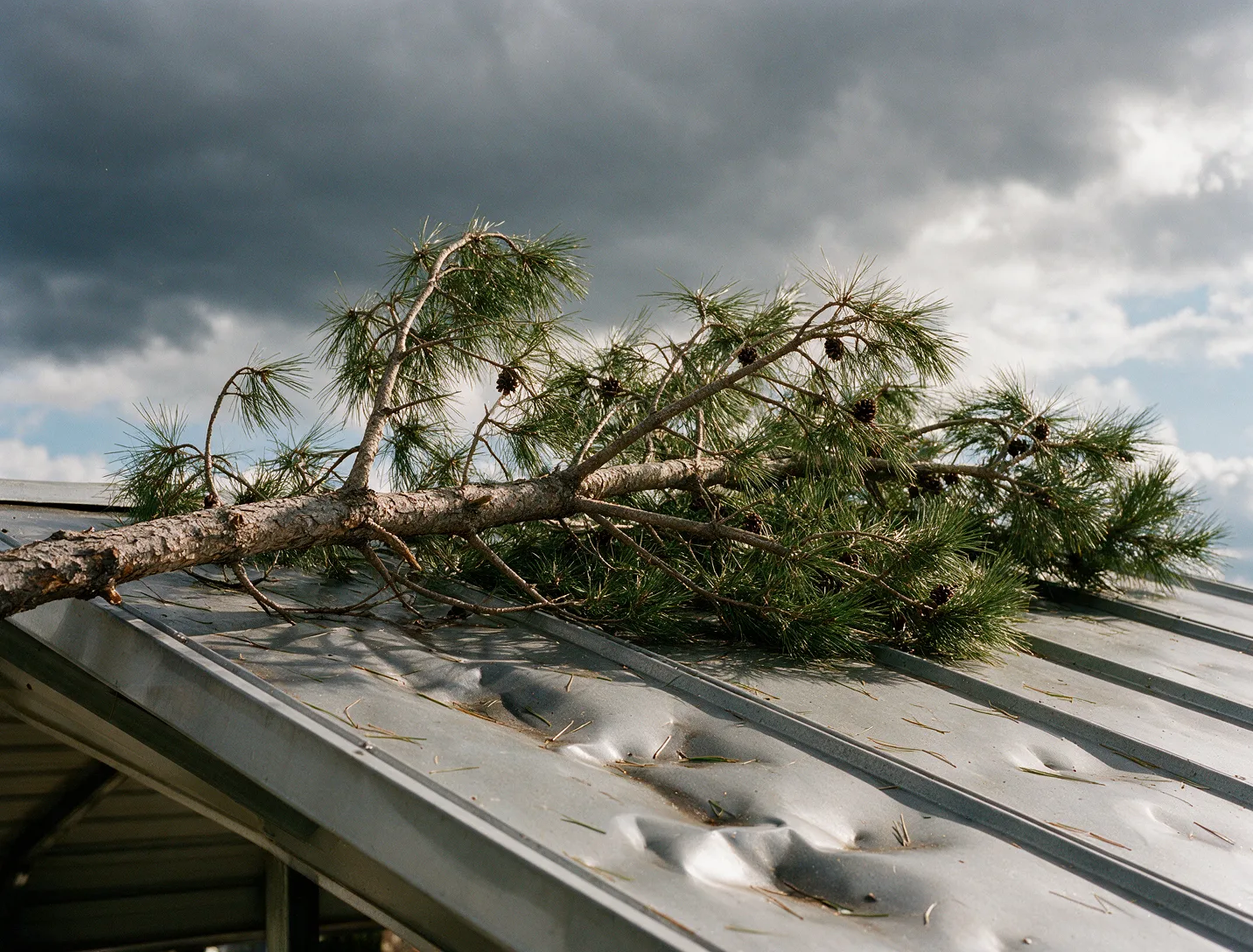
Visible Indicators After Storms
- Shingles with cracked surfaces or missing corners near ridge lines.
- Granule piles collecting in gutters after heavy rainfall events.
- Dents visible on metal panels when viewed from ground level.
- Water stains appearing on interior ceilings below roof valleys.
- Flashing lifted away from chimneys or vent pipes after wind.
How Wind and Hail Reach the Deck
Wind enters at the eave and travels upward under lifted shingles, tearing the nails that hold the course above. Hail strikes create circular fractures that radiate outward and allow water to wick along the felt surface until it finds a seam or fastener hole. Both patterns leave the deck exposed to repeated wetting cycles that weaken the wood fibers.
Technicians trace the path by lifting successive courses and checking for darkened felt edges. They also measure the depth of hail dents on metal to decide whether the panel can be left in place or must be cut out and replaced with a new section that matches the existing profile.
Measurements Taken During Inspection
Technicians count the number of damaged squares and mark the perimeter with chalk so the homeowner can see the exact scope. They probe soft spots in the deck with a screwdriver and record moisture readings at each test point. These numbers determine whether the repair stays on the surface or requires deck replacement.
On metal roofs the team checks seam integrity with a flat bar and notes any screws that have backed out. They also inspect step flashing at walls for separation and measure the overlap remaining after wind uplift to judge whether new flashing can be added without removing the entire slope.
Repair Choices Matched to Damage Type
Small hail dents on asphalt shingles are addressed by removing the affected course and installing new shingles that match the existing color and thickness. When wind has torn underlayment the team replaces the felt or synthetic layer in the affected area before reinstalling the shingles with longer nails into solid wood.
Metal panels with seam separation receive new butyl tape and screws at the correct spacing. If the deck has rotted the technicians cut out the damaged section, install new plywood, and tie the new metal into the existing panels with matching trim pieces so the slope remains weathertight.
First Steps for the Homeowner
Place a tarp over any visible opening and secure it with furring strips so water does not reach the interior while waiting for the crew. Photograph the interior stains and the exterior damage from ground level without climbing onto the roof. These images help document the extent before repairs begin.
Avoid running attic fans or opening windows near the affected area because increased airflow can push moisture deeper into insulation. Keep buckets under active drips and note the time of day when water appears so the technicians can correlate interior leaks with specific roof locations during the inspection.
Storm Damage Repair questions
How do technicians decide between repair and full replacement?
They count damaged squares and test deck moisture at multiple points. When damage stays under thirty percent of the slope and the remaining shingles show no widespread granule loss, targeted replacement of courses or panels is chosen. Larger affected areas require full slope replacement to maintain consistent water flow.
What materials are used to replace hail-damaged shingles?
New shingles of the same weight and color are installed over fresh synthetic underlayment. Longer roofing nails are driven into solid decking rather than old nail holes. Sealant is applied at the top edge of each new course to prevent wind from lifting the tabs again.
Can metal roof seams be resealed without panel replacement?
Yes when the panels remain flat and the deck is sound. Technicians clean the seam, apply new butyl tape, and install screws at the spacing recommended by the panel manufacturer. The existing trim pieces are reused when they still fit tightly against the wall or ridge.
What should be checked after driving rain enters the attic?
Technicians look for darkened felt edges and soft plywood along the rafters. They also inspect insulation for saturation and mark any areas where water has traveled horizontally under the deck before dripping into living spaces.
Storm Damage Repair Assessment
Contact MDS Roof Doctors so technicians can measure affected areas and determine the exact repair scope needed after storms.